Starchy Foods: Role in Daily Energy
Published: February 2026
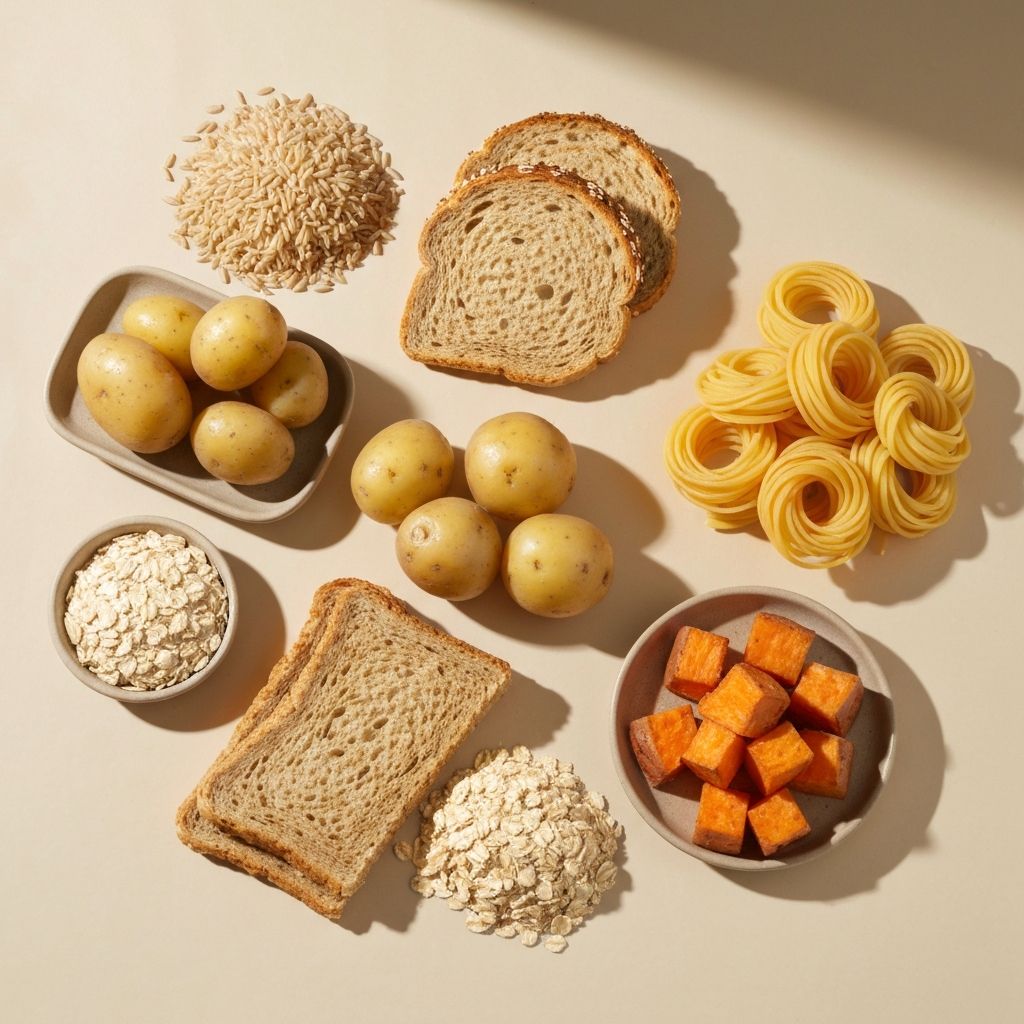
The Primary Role of Starchy Foods
Starchy carbohydrates form a substantial portion of plate models used in nutrition education. Their significant presence reflects their role as primary energy sources in human diets across cultures and history.
Starches – complex carbohydrates found in grains, vegetables, and legumes – provide glucose, which the body uses for energy production. This fundamental nutritional role explains their consistent inclusion across varied eating patterns worldwide.
What Are Starchy Foods?
Grains and grain products:
- Rice (white, brown, black, basmati)
- Wheat and wheat products (bread, pasta, flour)
- Oats
- Barley
- Corn
- Other grains like millet, quinoa, buckwheat
Root and tuber vegetables:
- Potatoes
- Sweet potatoes
- Yams
- Parsnips
Whole Grains Versus Refined Grains
There is an important distinction within the starchy food category between whole grains and refined grains, though both contribute carbohydrate energy.
Whole grains retain all three parts of the grain: the bran (outer layer), the germ (nutrient-rich center), and the endosperm (starchy interior). This means whole grains retain more fiber, vitamins, and minerals compared to refined versions.
Refined grains have had the bran and germ removed, leaving primarily the starchy endosperm. While still providing carbohydrate energy, they contain less fiber and certain nutrients compared to their whole grain counterparts.
Most nutrition education recommends including whole grain options regularly, though both types appear in typical eating patterns worldwide.
Energy and Satiety
Starchy foods provide approximately 4 calories per gram of carbohydrate. This caloric density, combined with the volume these foods provide, makes them particularly useful for meeting energy needs while maintaining satiety across a meal.
The fiber found in whole grain and legume-based starches contributes to feelings of fullness and plays a role in digestive function. This is one reason whole grain options are often emphasized in nutrition education.
Global Importance
Across different cultures and regions, starchy foods form dietary staples:
- Rice is central to many Asian cuisines
- Wheat-based breads and pasta are foundation foods in Mediterranean and European traditions
- Potatoes are significant in European and South American cuisines
- Corn is fundamental in Central and South American food cultures
- Diverse grains are staples across African and Middle Eastern food traditions
This cultural prevalence reflects both the nutritional value of starches and their agricultural accessibility in different regions.
Starch and Fiber Connection
An important point in nutrition education is the relationship between starch and fiber. Starchy vegetables and whole grains contribute not only carbohydrates but also dietary fiber – an important component for digestive health that isn't directly used for energy but serves other physiological functions.
Refined starches provide carbohydrate energy with less fiber, while whole grain and legume-based starches provide both carbohydrate and fiber. This distinction helps explain why variety within the starchy food category matters.
Important Context
Information note: Starchy foods are an important part of most varied diets. Individual carbohydrate intake and preferences vary widely. This article provides educational information about the nutritional role of starchy foods without recommending specific intake levels for individuals.