Why Vegetables Take Half the Plate
Published: February 2026
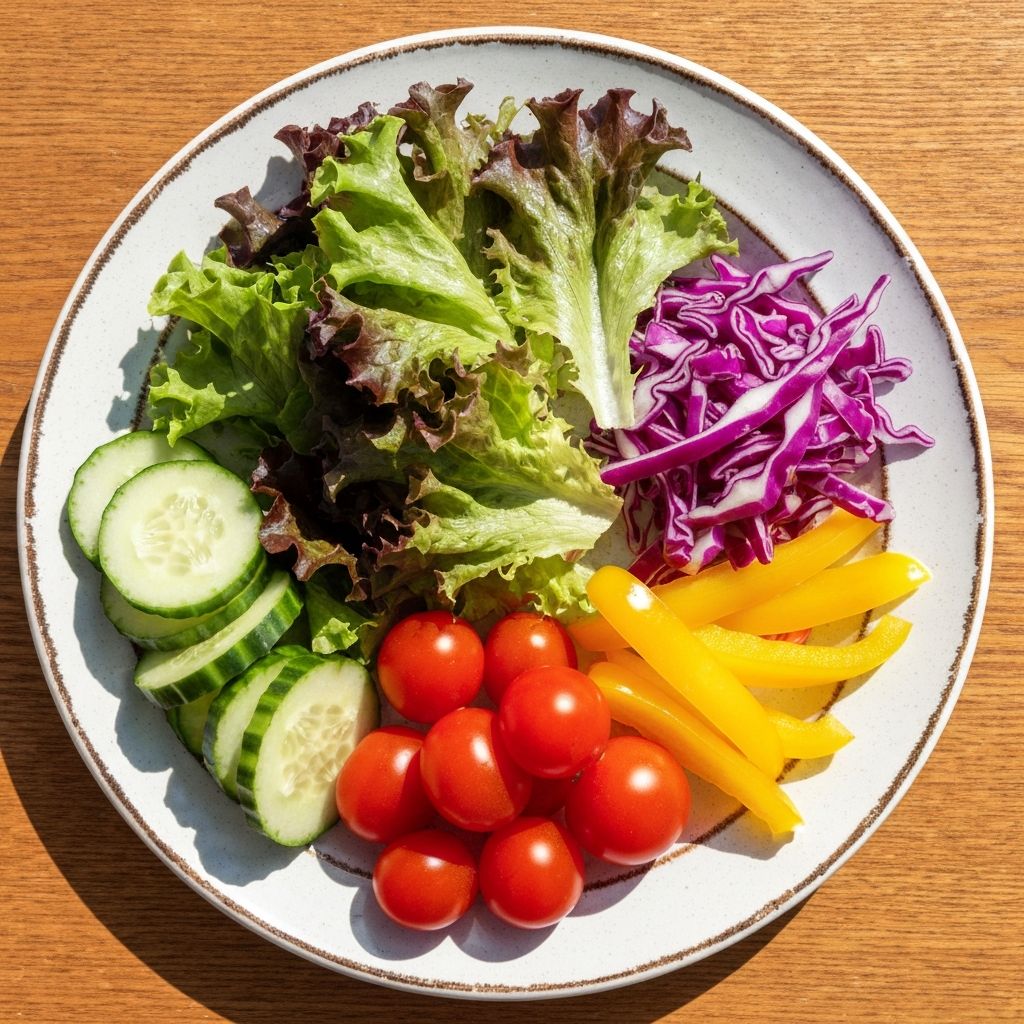
The Science of Volume
In plate models used for nutrition education, vegetables and fruits typically occupy the largest visual portion – approximately half the plate. This emphasis reflects both nutritional and practical considerations in how food is distributed across meals.
The primary reason for this substantial allocation is volume combined with nutrient density. Vegetables and fruits contain high water content and fiber, which means they provide significant volume without excessive calories compared to other food groups.
Water Content and Satiety
Most vegetables and fruits contain 80-95% water by weight. This high water content allows people to consume substantial portions that feel satisfying without accumulating excessive calories from the food itself. The fiber in these foods also contributes to feelings of fullness.
In practical eating patterns, vegetables and fruits can form the visual bulk of a plate while contributing fewer calories than other components like grains or proteins that are more calorically dense.
Nutrient Density Explained
Beyond volume, vegetables and fruits deliver a concentrated package of nutrients relative to their caloric content. This is often described as nutrient density – the amount of vitamins, minerals, and beneficial compounds per calorie.
Key nutrients from vegetables and fruits:
- Vitamins A, C, K, and folate
- Minerals like potassium, magnesium, and manganese
- Fiber for digestive function
- Phytonutrients with antioxidant properties
- Limited fat and sodium compared to many processed foods
Color as an Indicator of Variety
The range of colors across vegetables and fruits – from deep greens to bright oranges, reds, and purples – reflects different nutrient profiles. Each color typically indicates the presence of specific beneficial compounds.
Color-nutrient associations:
- Green: Often rich in lutein, vitamin K, and various minerals
- Orange/Red: Often contain beta-carotene and lycopene
- Purple/Blue: Often rich in anthocyanins and antioxidants
- White/Pale: Often contain specific sulfur compounds and fiber
Including a variety of colors naturally encourages consumption of a broader range of nutrients.
Practical Meal Construction
In real meal situations, vegetables often form the visual foundation of a plate. They pair easily with other components – grains, proteins, and fats – while contributing bulk and different flavors and textures to the overall meal.
Because of their versatility and relative affordability compared to some other food categories, vegetables can be incorporated across multiple meals and cuisines, making them practical for varied eating patterns.
Variation Across Cultures
While the proportion of vegetables varies across different cuisines and cultures, the principle remains consistent: vegetables and plant-based foods form a significant component of meals in many traditional food patterns worldwide.
Different cultures prepare and combine vegetables differently, but the underlying concept – that vegetables provide important nutritional value alongside other food components – is nearly universal in traditional diets.
Important Context
Information note: While vegetables and fruits are nutrient-dense foods, this information is educational. Individual dietary preferences and needs vary. Some people may consume vegetables in different proportions while still meeting nutritional needs through other food choices.