Breaking Down the Eatwell Guide
Published: February 2026
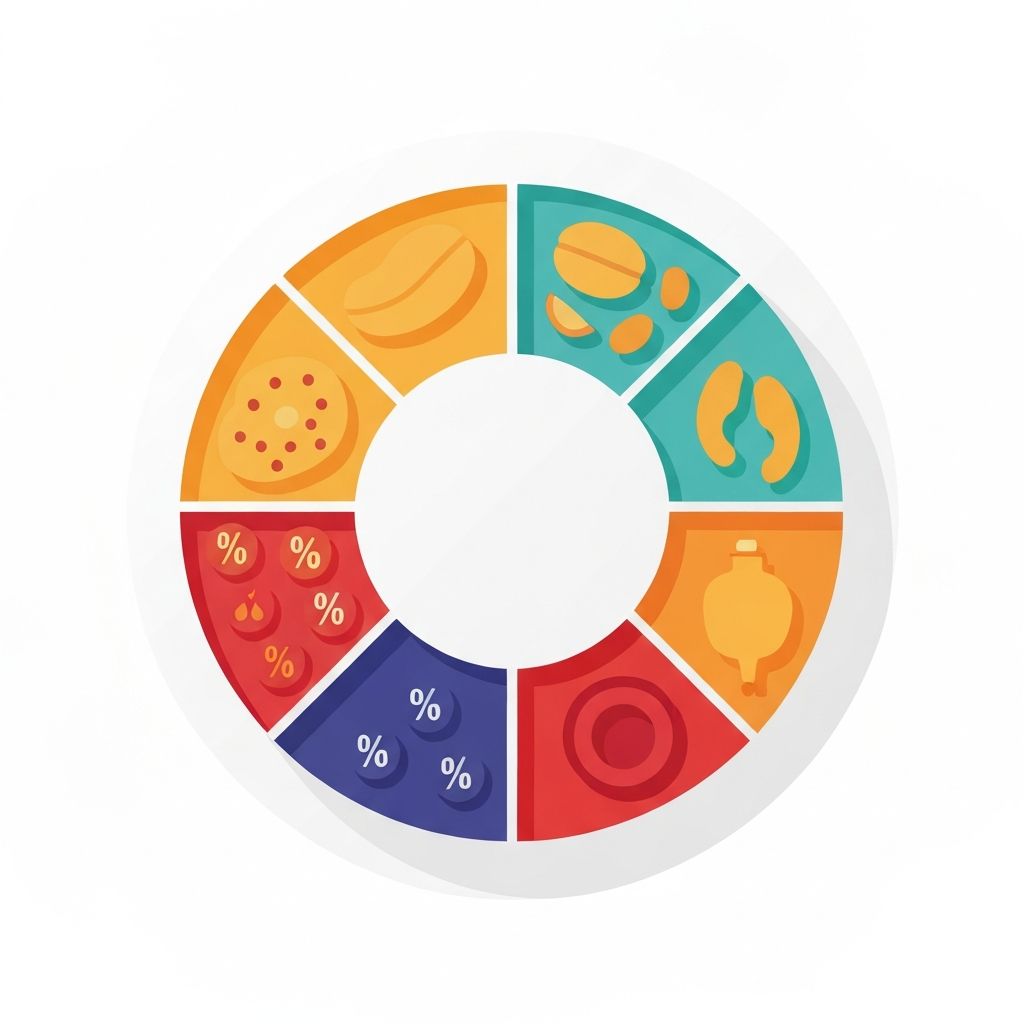
Understanding the Structure
The Eatwell Guide is an official educational tool used in the United Kingdom to explain general principles of balanced nutrition. It represents a visual model used in public health communication and nutrition education across the UK.
The guide divides a plate into distinct sections, each representing a food group with suggested proportions. These proportions reflect patterns observed in nutrition research and are used to help people understand how different foods combine in everyday meals.
The Five Main Sections
1. Vegetables and Fruits
This section takes up approximately one-third of the plate. It emphasizes the role of vegetables and fruits in providing volume, fiber, vitamins, and minerals. The variety of colors across this section represents different nutrient profiles available through diverse produce.
2. Starchy Carbohydrates
Another significant portion – approximately one-third – is devoted to starchy foods. These include grains like rice and wheat, along with potatoes and some pulses. This section reflects the role of starchy foods as primary energy sources in most eating patterns worldwide.
3. Protein
Protein sources comprise approximately one-fifth of the plate. The model includes both animal-based options (meat, fish, eggs, dairy) and plant-based options (legumes, nuts, seeds). This reflects the diversity of protein sources available across different cultures and dietary choices.
4. Dairy and Alternatives
A smaller section represents dairy products and plant-based alternatives. This category includes milk, yogurt, cheese, and fortified plant-based options. While represented in smaller portions, these foods contribute important nutrients like calcium and protein.
5. Oils and Spreads
The smallest section represents fats and oils. While small in visual proportion, these foods play important roles in nutrient absorption and food preparation. The model recommends using oils in moderation.
How the Proportions Were Determined
The Eatwell Guide proportions are based on nutritional science research and public health recommendations. They reflect patterns that support nutrient adequacy when a variety of foods within each group are consumed.
The proportions are not individual prescriptions but rather general guidelines used in education. They help people visualize the concept of food variety and understand how different nutrients come together across a day of eating.
Practical Application
People use the Eatwell Guide in different ways. Some use it to think about individual meals, while others consider it across an entire day. There is no single "correct" way to use the guide – it serves as an educational reference point rather than a rigid rule.
Real meals and plates show variation. A particular meal might have more vegetables than the model suggests, while another might emphasize protein more heavily. Over time and across multiple meals, the general balance tends toward the model's proportions in many varied eating patterns.
Important Context
Information note: The Eatwell Guide is an educational model. It describes general patterns and is not personalized advice. Individual nutritional needs vary based on age, activity, health status, and other factors. For specific dietary guidance, consult a healthcare provider or registered dietitian.
Variations and Alternatives
Different countries and organizations have created their own nutrition education models. While they may look different, they generally communicate similar concepts about food variety, balance, and the roles of different food groups.
The Eatwell Guide remains a widely recognized tool in UK nutrition education and continues to evolve as scientific understanding develops.